
Electronic invoicing and electronic reporting have undergone a major reform recently, impacting companies of all sizes and in all sectors. This legislative change is aimed at improving the efficiency of billing and reporting processes, while reducing tax evasion and promoting financial transparency. In this article, we will review the most important information regarding this reform of e-invoicing and e-reporting, to help companies comply with the new requirements.
What is the reform of electronic invoicing ?
The reform of e-invoicing and e-reporting implies specific legal obligations. Companies are required to issue electronic invoices in accordance with the format and specifications defined by the competent authorities. They must also archive these electronic invoices for a specified period. With regard to electronic reporting, companies must submit regular electronic declarations including the financial information required by the tax authorities.
What is e-invoicing ?
E-invoicing corresponds to electronic invoicing. It refers to the process of creating, sending, receiving, and processing invoices in a paperless manner. E-invoicing supports B2B exchanges between taxable persons established in France.
What about e-reporting ?
On the other hand, e-reporting corresponds to the transmission of data to the tax authorities. This transmission concerns all those not falling within the scope of e-invoicing, that is to say:
- B2C transactions
- International B2B transactions
- Payment data relating to service delivery
E-reporting helps to speed up the reporting process, reduce errors and facilitate compliance with regulations.
What are the benefits of electronic invoicing ?
Electronic invoicing has many benefits for businesses, such as :
- The reduction of costs related to printing, mailing, and storing paper invoices.
- Environmental protection, since the more companies use dematerialization for billing purposes, the more they will contribute to safeguarding forests.
- It also ensures the pre-filling of VAT declarations, thus speeding up the billing process, improving data accuracy, and facilitating payment tracking.
- With regard to electronic reporting, it simplifies the transmission of financial information to the tax authorities, reduces the risk of errors and penalties, and promotes better management of financial data within the company.
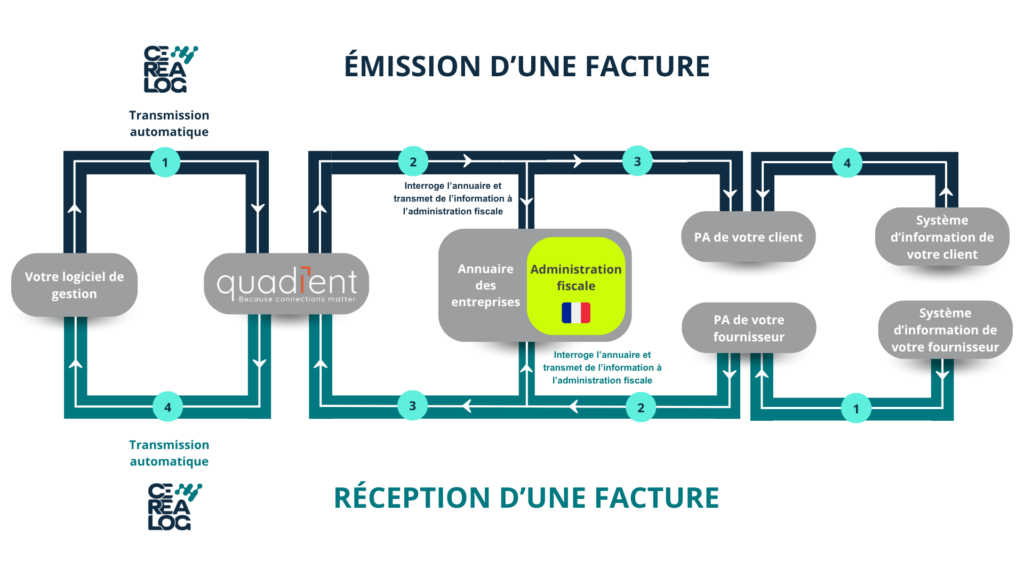
The stakeholders concerned by electronic invoicing
- Public billing portal (PPF)
- Approved Platforms (AP)
- Dematerialization operators (OD)
- Tax authorities
CEREALOG, a trusted player at the heart of the electronic invoicing process
Impact of non-compliance on this reform
Non-compliance with e-invoicing and e-reporting reform can lead to serious consequences for companies. This may include fines and financial penalties, delays in processing payments, disruptions to business relationships with partners and negative reputation. It is therefore essential to comply with the new requirements in order to avoid these potential problems.
The reform of electronic invoicing and reporting represents an important step in the modernization of financial processes of companies. By complying with the new legal obligations, companies can benefit from numerous advantages, such as cost savings, improved operational efficiency and increased transparency. It is essential for companies of all sizes and in all sectors to become familiar with the specifics of the reform and to take the necessary steps to ensure a smooth transition to e-invoicing and e-reporting.
CEREALOG supports you in your compliance implementation on the SAP Business ByDesign, S/4HANA Cloud and SAP Business One systems.