
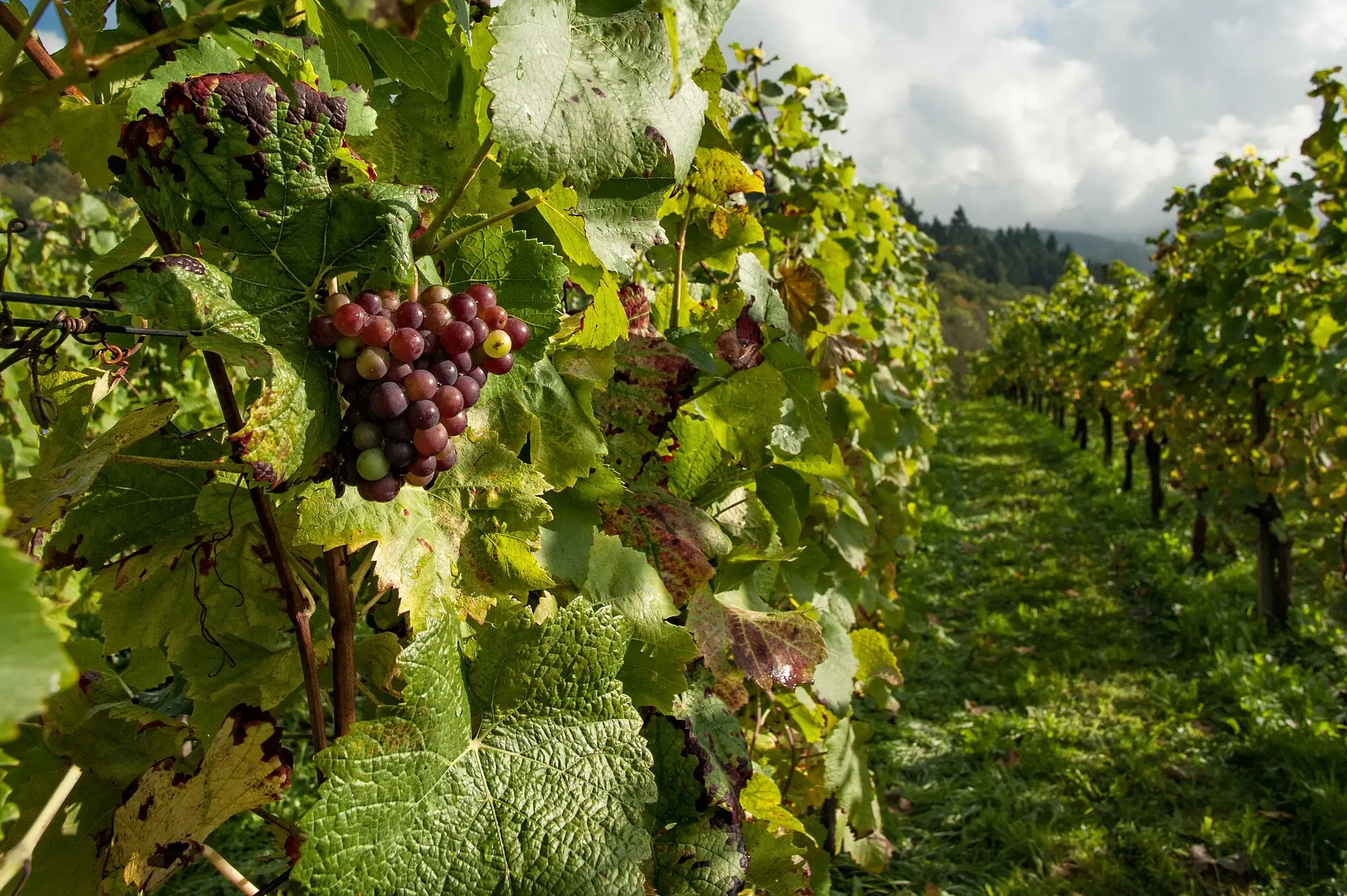
Winegrowers, wine merchants, sales agents, sommeliers, wine merchants, and wine cooperatives: the wine and spirits sector brings together numerous players whose need for management tools is growing in order to face up to competition. ERP software, by centralizing the different activities of a company, from order taking to logistics flows, allows to optimize the business of this sector, whatever the profession concerned. Discover why ERP solutions and wine and spirits companies go hand in hand.
ERP wine : an essential tool in this unique sector
Recognized as a cultural and gastronomic heritage, wine is a product at the heart of many professions from producer to distributor. Some companies specializing in wines and spirits also include all the activities specific to the sector, and thus must be able to manage the entire production chain while maintaining relations with their customers. In this situation, to stand out from an ever more present competition and focus on the technicality of wine professions without being burdened by practical constraints related to work tools, it is essential to opt for a suitable ERP software. Acronym for “Enterprise Resource Planning”, this type of IT tool centralizing all the operations of a company allows you to benefit from a global view on all activity. If you work in the wine and spirits sector, the services covered by an ERP software for SMEs such as SAP Business ByDesign correspond to the specificities of your profession. It is about :
- sales;
- purchases of bulk wine;
- inventory management;
- the supply chain (logistics flows);
- monitoring of quotas and available stocks;
- the control room or subject matter accounting;
- finances;
- human resources;
- the customer relationship,
The data specific to these different areas of activity (traceability of goods flows, purchase orders, directory and monitoring of customer files, accounting balance sheet, inventory…) are thus centralized on a single IT support installed on site or through a cloud system. The latter option also reduces internal costs in terms of IT management and gives those involved in the wine and spirits business greater freedom of action.
Configuring your ERP in wine for greater profitability
Carefully selected according to a set of specifications listing all the company’s needs, an ERP software for wines and spirits addresses about 80% of the issues encountered by the company. The remaining 20% depends directly on the custom configuration of the ERP. As a partner integrator of SAP, CEREALOG adapts its software to the specific constraints of the company. In the case of an SME in wines and spirits, for example, it will be a question of optimizing the search engine of the tool so as to include the specific criteria of the products of the sector (appellations, vineyards, grape varieties, vintages…). It could be a matter of creating an interface that communicates with GAMMA-type solutions to manage the control room. Also, to track quotas and available stocks, to set up traceability for example. Many other customizations are possible depending on the constraints of your business.
The benefits offered by an ERP in wines and spirits
In a fast-growing sector and a competitive market in turmoil, the main challenge of a wine ERP is to improve the company’s competitiveness. Thanks to the deployment of the tool under optimal conditions, as close as possible to the operational needs of the entity, the ERP offers the following benefits:
- inventory optimization thanks to better real-time visibility and updated reporting, resulting in more profits;
- an improvement in the monitoring of distribution channels for greater customer satisfaction;
- facilitation of product traceability and compliance with customs constraints;
- a reduction in workload and better communication between the different departments of the company;
- increased sales and purchasing opportunities, particularly with the mobile version of the ERP, which allows reps and traders to access the database from any location, including internationally.
An ERP for wines and spirits to support the growth of an SME
In the case of setting up a company or when it comes to a small or medium-sized structure, the possibilities for rapid growth should be taken into consideration. It is therefore essential to integrate a wine ERP capable of integrating new features according to the evolution of the entity in order to support its development without restriction. The ERP Cloud tools are very flexible and are particularly suitable for SMEs. More agile than on-site software, these tools installed in SaaS mode can be modulated according to the company’s transformations. A real plus that provides all the favorable conditions for the growth of an SME in wines and spirits. Depending on the layout of positions and the company’s structure, it is also possible to customize user interfaces and distribute different roles according to professions and departments.
Optimization of logistics : an advantage for the wine and spirits sector
What could be better than deadlines met and stocks updated in real time to stand out on the wine and spirits market ? Since purchases and sales are at the heart of this trade-oriented sector of activity, the logistics division is one of the services particularly concerned by an ERP management tool. As such, thanks to the pooling of data and innovative technological tools, a wine ERP acts effectively on the supply chain at all stages of distribution. Thus, this integrated software reduces delivery times thanks to immediate order processing and direct communication with the tools of partner transport companies. It is also possible to issue shipping vouchers as soon as the invoice is issued in an automated way and to save more time, but also money. Because with improved logistics flows and transparent traceability tracking, accessible in all circumstances, the ERP in wines and spirits indirectly generates better quality distribution, customer loyalty and favorable results in the short and long term.
IoT, predictive analysis : towards a smart wine ERP
In order to meet the needs of SMEs, SAP ERPs now use Artificial Intelligence, integrating machine learning (predictive trend analysis) and IoT (Internet of Things). Also known as the Internet of Things, IoT allows you to collect new data and send it directly into the ERP. In the wine sector, for example, it will be possible to connect drones to monitor vineyard plots remotely. These features offered by new technologies interfaced with an ERP are ideal for automating certain tasks and improving decision-making, notably thanks to predictive analysis.